Arm care
Dead arm is a circulation problem, not a toughness problem
Why pro baseball quietly dropped the ice bag, what active recovery actually moves, and how the pads go on.
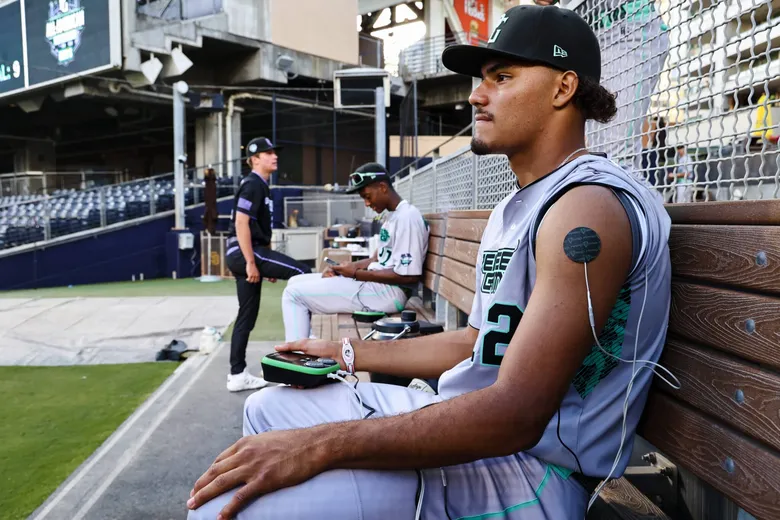
A pitcher throws 78 pitches on Friday night. Saturday morning the arm feels fine in warmups and strange by the third inning. Sunday it is heavy, slow, a half tick down, and nobody can point to an injury. Coaches call it a dead arm. Players call it a dead arm. It is worth saying plainly at the top: dead arm is not a diagnosis. It is a word for a feeling, and the feeling shows up long before anything is torn.
What follows is not medical advice, and none of it comes from us. It is what one company that builds recovery devices publishes about the problem, plus the research it puts its name on, plus the protocol it hands to pitchers. Marc Pro has been making the same argument since 2011, and it is a narrow one: the arm between outings is not short on toughness. It is short on traffic.
Figures published by Marc Pro on its baseball page. Elsewhere on the same site the company counts 100+ pro teams, 500+ college teams and 120,000+ athletes across all sports.
What the word actually describes
Ask ten people in a dugout what a dead arm is and you get ten answers. Ask what it feels like and the answers converge: heavy, tight, slow to come around, fine at rest and gone by the twentieth throw. It is the most common complaint in a sport built on repetition, and it is also the least specific.
The framing Marc Pro uses is mechanical rather than clinical. Hard work damages tissue. Repair needs supplies delivered in and byproducts carried out. Both jobs run on blood flow, and blood flow in a muscle is driven largely by the muscle contracting. Sitting on a bus after a tournament, the arm that needs circulation the most is the one doing the least.
Marc Pro delivers vital nourishment to tired, sore muscles while efficiently removing harmful waste. Its unique technology provides non-fatiguing muscle activation, enabling athletes to enjoy all the benefits of active recovery without additional muscle strain. Marc Pro, marcpro.com baseball page
That sentence contains the whole product argument, and the load-bearing word in it is non-fatiguing. Hold on to it. Everything below turns on it.
The ice bag stopped being the answer
For thirty years the picture of arm care was a bag of ice and a wrap of plastic film. If you played, you iced. The protocol had a name, RICE, and a father, Dr. Gabe Mirkin, who coined it in 1978 and then publicly walked it back in 2015. Marc Pro tells that story on its own blog, which is unusual for a company selling the alternative.
Although popular, there is no evidence whatsoever that icing is beneficial. Quoted in Marc Pro's post on the Eric Cressey podcast episode about icing. Cressey is president of Cressey Sports Performance and director of player health and performance for a major league club.
The company's own summary of where the sport landed is blunter still. In a post aimed straight at baseball players it writes that research has since shown ice does not promote recovery but slows the body's natural repair process, that inflammation is the first stage of recovery rather than the enemy of it, and that swelling is what happens when supplies arrive faster than waste leaves. Then it adds the line that will land hardest with anyone still filling a bag after every outing:
In fact, you're in the extreme minority nowadays in professional baseball if you're still icing. Marc Pro, Ditch the Ice, October 2023
Whether or not you accept that reading of the literature, note what it does to the shape of the problem. If the answer is not to slow things down, the answer has to be to move things along. That is what active recovery means, and it is why the tool changed.
What active recovery actually moves
Marc Pro's published mechanism is three steps long, and it is easy to follow because it is the same thing a jog does, minus the jog.
A gentle signal makes the muscle contract
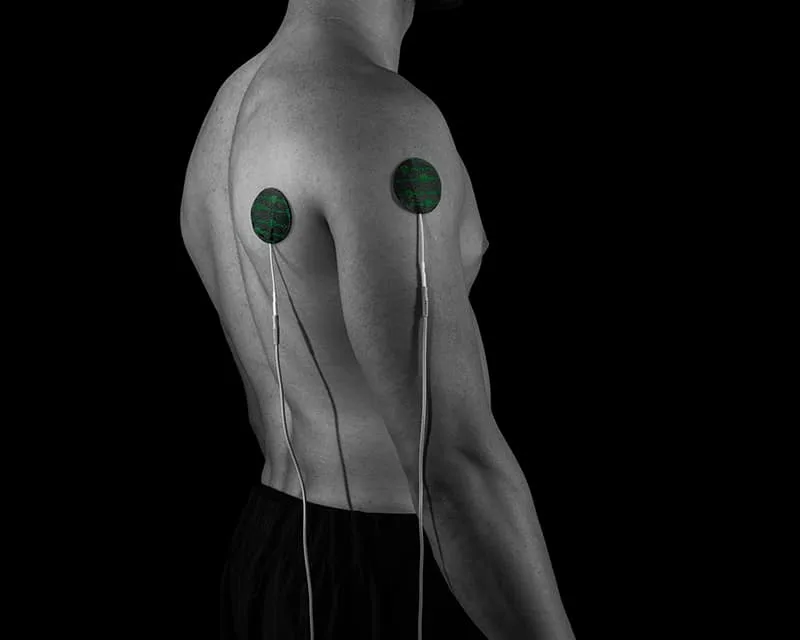
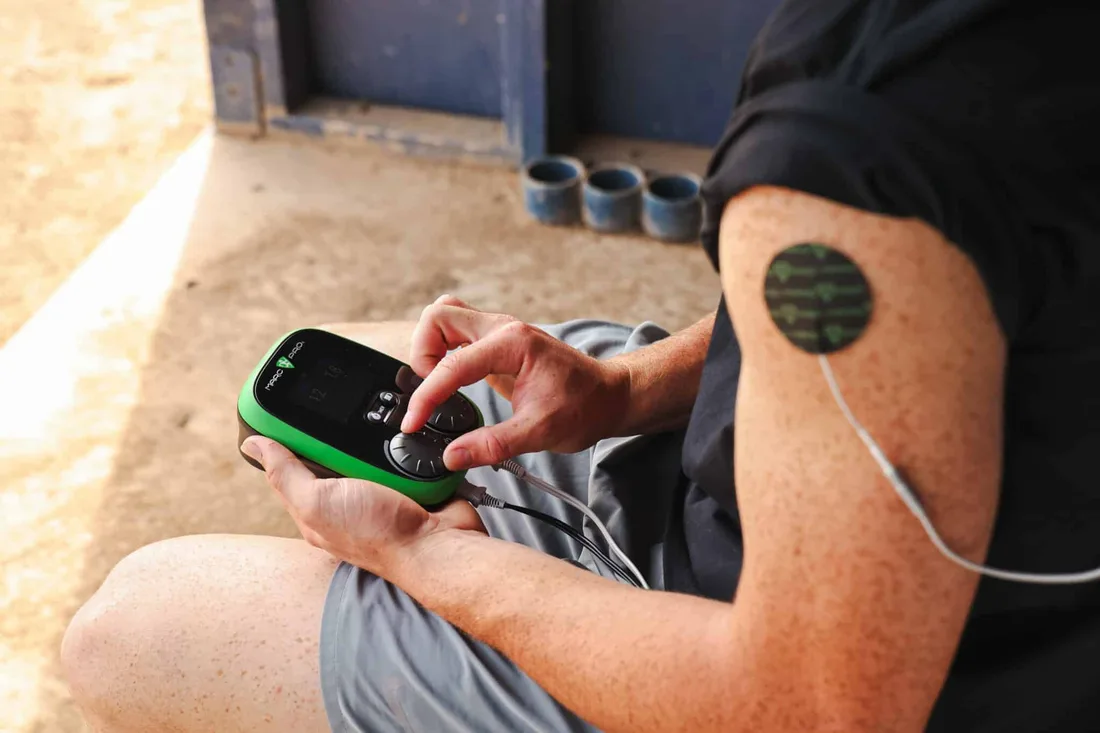
Two pads, two channels, a low-intensity current. The muscle shortens and lengthens on its own while the athlete sits still.
Vessels open and flow rises
Marc Pro attributes this to nitric oxide released when muscle contracts, which widens vessels and raises the flow through the tissue.
Supplies in, byproducts out
Oxygen and nutrients arrive, waste leaves. Repeated often enough, the company says the process also promotes angiogenesis, the growth of new vessels.
Mechanism as described by Marc Pro on its technology page and in its post on electrical muscle stimulation. Diagram drawn for this page.
None of that is exotic. A cooldown jog does the same thing. The difference is that a pitcher who just threw 78 pitches does not want to add more work to the arm that is already the problem, and the leg-day athlete does not want to spend an hour of the evening moving. The device is a way to get the contractions without the cost.
Why the contraction has to stay gentle
This is where most muscle stimulators lose the plot, and Marc Pro's answer in its own FAQ is the clearest thing on its site.
The problem is that the harsh signals used by most stim limit how strong muscles contractions can be and how long you can use the device for. Too much and you'll start to fatigue muscles and go in the opposite direction than you want. Marc Pro, FAQ page, on stimulators with an EMS function
Read that as an engineering constraint rather than a sales line, because that is what it is. A strength device wants a hard contraction. A recovery device wants a long one. The first fatigues the muscle, which is the whole point when you are training and exactly the wrong outcome when you are trying to get an arm back for Sunday. Marc Pro's claim is that its waveform sits low enough that fatigue never accumulates, which is why the company can tell people to run it for an hour and not worry.
By the clock
After activity: 30 minutes or longer is what Marc Pro recommends. Average session length on its own numbers is 30 to 60 minutes, and the company says the contractions never cause fatigue, so there is no way to overdo it.
Before activity: 10 to 15 minutes to warm the muscle up.
Position: sitting or lying down, relaxed. When a muscle can contract without resistance, more fibers are recruited, which is the difference between a session that works and a session that passes the time.
It is not a TENS unit, and the difference is the point
Half the confusion in this category is one word doing two jobs. TENS and EMS both send current through a pad, and that is where the similarity ends. Marc Pro's FAQ draws the line hard.
TENS devices send an electrical signal through the skin that at best will block or mask pain signals from reaching the brain while the device is on. There are no therapeutic, rehabilitative or recovery benefits. Marc Pro, FAQ page
Set against the rest of the recovery shelf, the company's own comparison reads like this.
TENS unit
Massage gun
Compression boots
Marc Pro
The first line of each card follows the comparison Marc Pro publishes on its compare page. The second line is this article's summary of the tradeoff each tool carries.
What the research says, and what it does not
Marc Pro publishes a pilot study on its own blog, and the honest way to read it is to notice both what it found and how small it was.
Two studies. In the first, participants did leg extensions. In the second, they hiked to induce quadriceps soreness. In both, the device was applied to one leg only, which is the cleanest design available for this kind of question because each participant is their own control. The treated leg showed lower soreness and fatigue. In the first study the treated leg also completed more repetitions.
Marc Pro may significantly improve muscle recovery and muscle endurance. Conclusion of the pilot study as quoted by Marc Pro, Research Shows
The word doing the work there is may, and the company leaves it in. It also publishes the caveat that the mechanism of the improvement is unknown, and that the underlying technology has shown a nitric oxide dependent enhancement of microcirculation and angiogenesis in rats, along with improved swim performance and lower plasma lactate in athletes. A pilot study on a handful of legs is not a large randomized trial, and rats are not pitchers. Anyone who tells you otherwise is selling something less carefully than Marc Pro is.
Where it turns up
Adoption is not proof of mechanism, but it is a fair proxy for whether the thing survives contact with a training staff that has no patience. Marc Pro counts 30 pro teams, more than 500 collegiate programs and more than 200 professional pitchers. In January 2024 it became an official supplier to USA Baseball, which put the devices in the hands of six national teams during international competition.





Organizations listed by Marc Pro on its baseball page. The USA Baseball agreement was announced by USA Baseball in January 2024.
The more useful evidence is smaller and less official. In September 2024, Perfect Game All-Americans were asked what they actually did with the device. The answers are not marketing copy, they are teenagers describing a Tuesday.
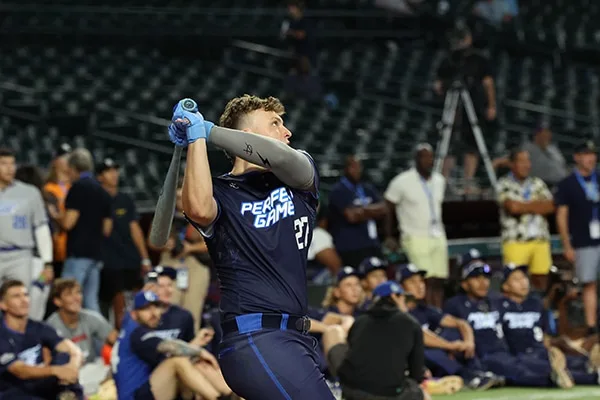
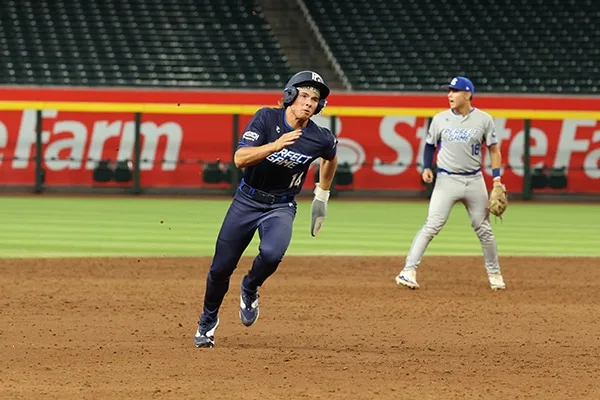
Big fan, the first night I fell asleep with it on my back. Got a nine hour back session in. I felt pretty good the next day. And then yesterday, I did my arm after I had a little forearm workout and I felt a lot better in the morning. Josiah Hartshorn, quoted in Marc Pro's Perfect Game write up
I used it when we played in North Carolina for high school, and I used it after I threw and next day arm felt great. Billy Carlson, same write up
A nine-hour session is not something a strength device could survive, and that detail is the best proof of the non-fatiguing claim on the whole site. In July 2026 the company published the same routine one level up, with newly drafted players Jacob Lombard, Grady Emerson and Gio Rojas using it after throwing, training and games.
Jordy Bahl's arm care, pad by pad
Softball gets the same problem with a shorter rest window and a heavier tournament calendar. Jordy Bahl, the Gatorade National Softball Player of the Year for the 2020 to 2021 season, published her placement with Marc Pro in April 2024, and it is the clearest worked example on the internet of what a session looks like for a pitcher.
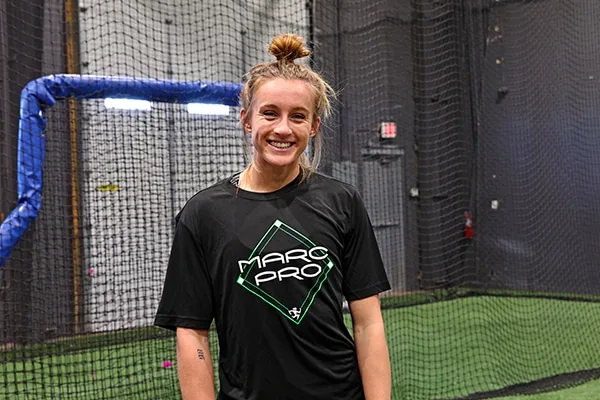
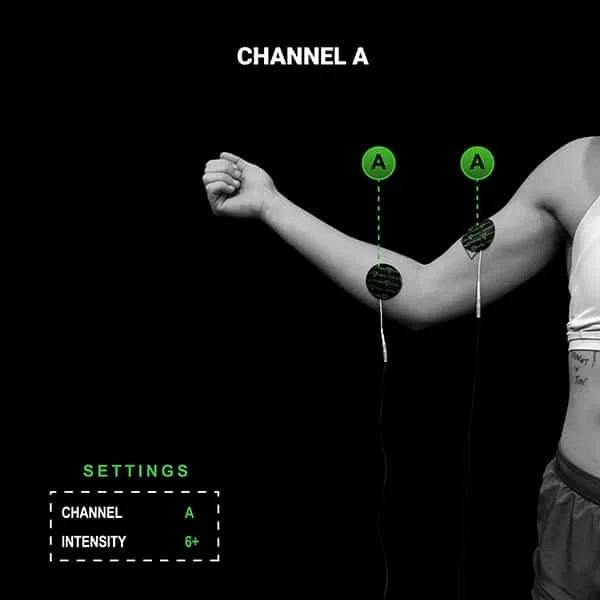
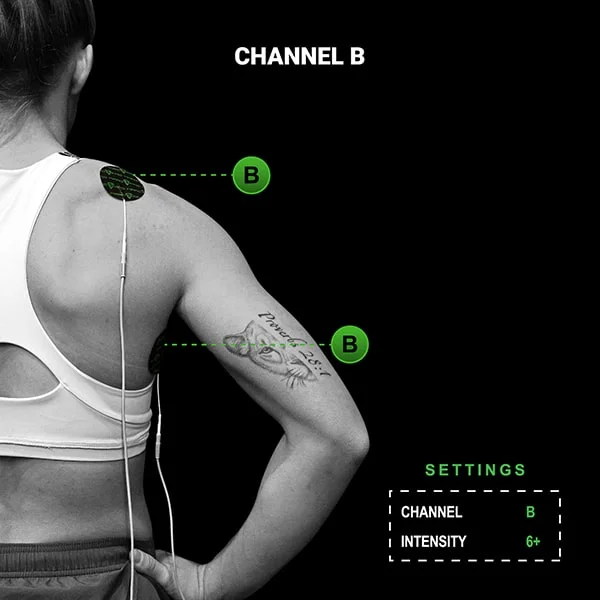
Placements as published in Jordy Bahl's arm care protocol.
The 30 minutes, laid out
Marc Pro's baseball placement guide is free, public and specific enough to follow without a coaching call. Here is the version a pitcher would run after an outing.
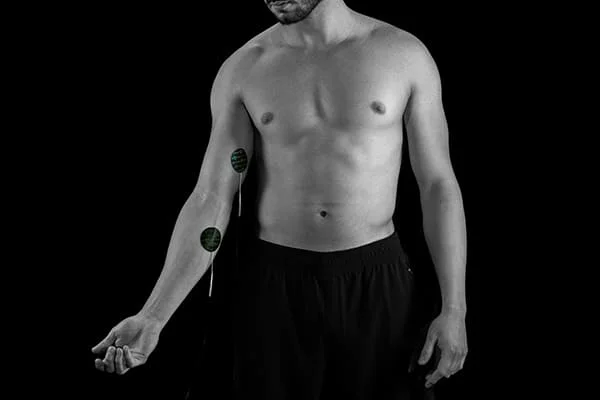
Then pick the second channel by what actually hurts
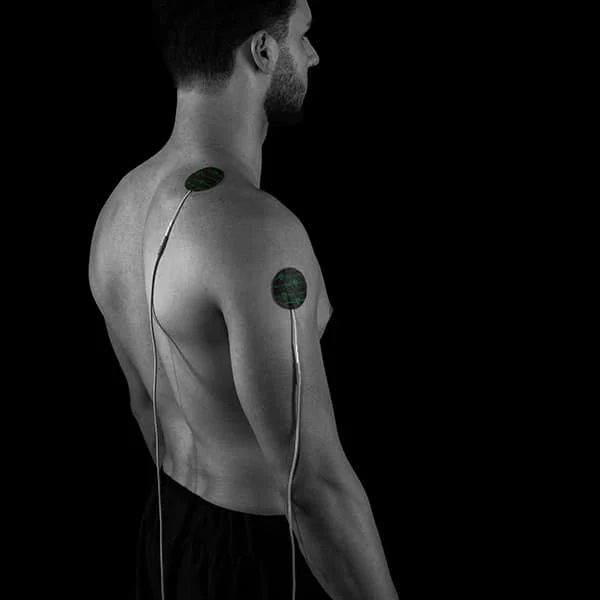
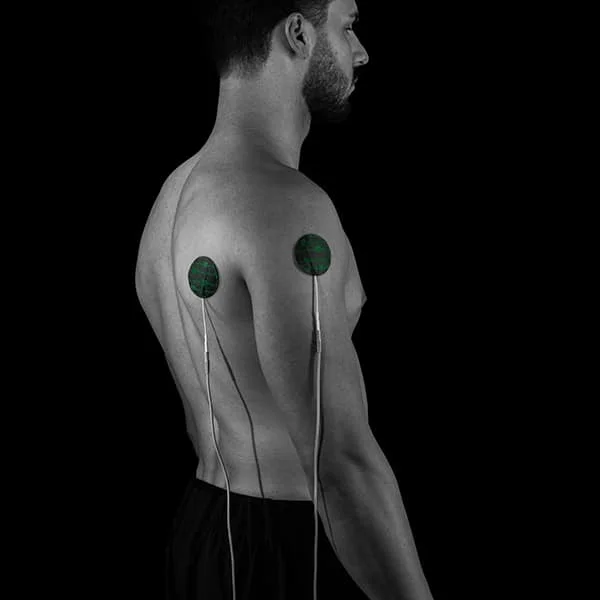
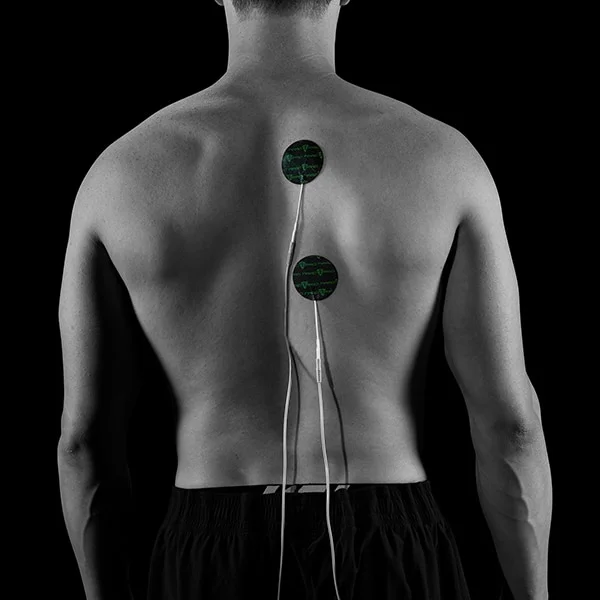
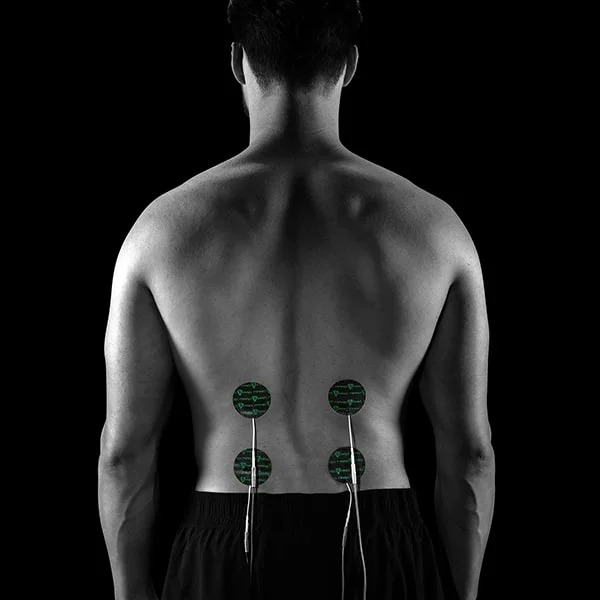
Every placement above is published by Marc Pro in its baseball pad placement guide, with more in the interactive body map.
See the baseball setup on marcpro.comFree shipping with a device purchase. 30-day money-back guarantee.
What it costs
This is a serious purchase and the page should say so plainly rather than bury it. There are two devices, and the second one is not a bigger version of the first, it is the first plus a pain control mode.
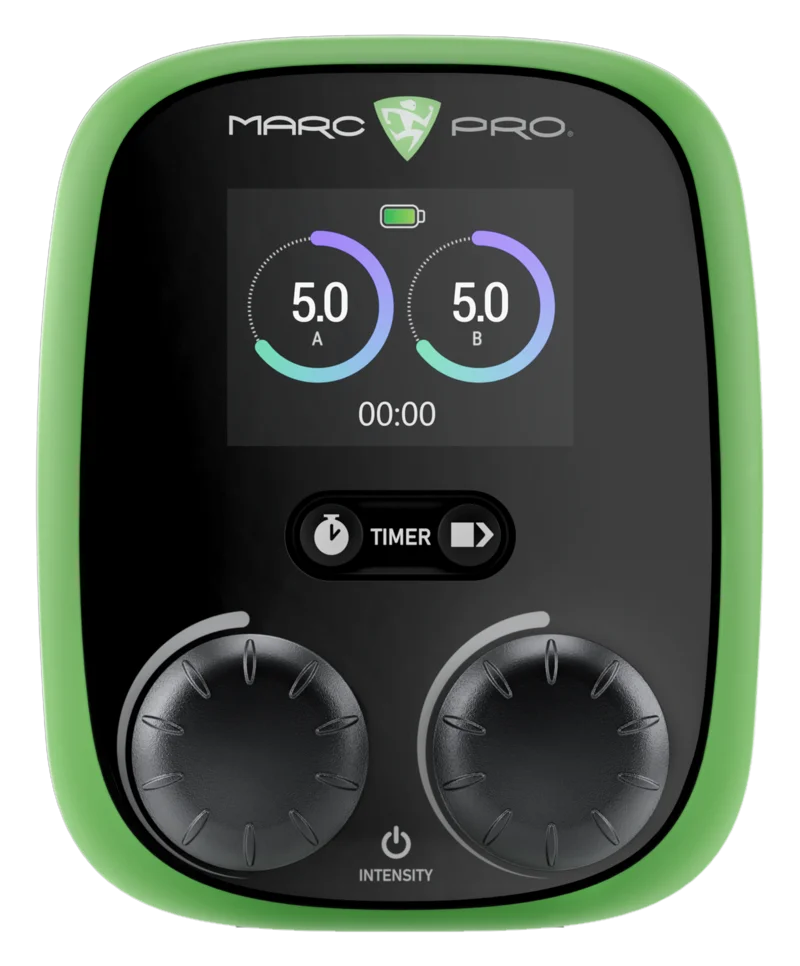
Marc Pro
$699
or 12 payments of $63.25
- Recovery mode, one setting, two channels
- 6 packages of electrodes, 2 lead wires, charger, case
- 3-year warranty, 30-day money back
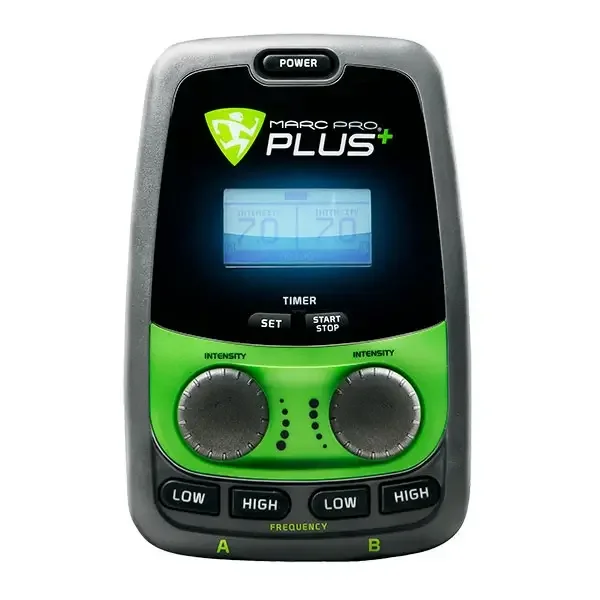
Marc Pro Plus
$1,399
or 12 payments of $121.58
- Everything above, plus a high-frequency pain control mode
- Marc Pro says relief can last hours after the device is off
- Same warranty and same guarantee
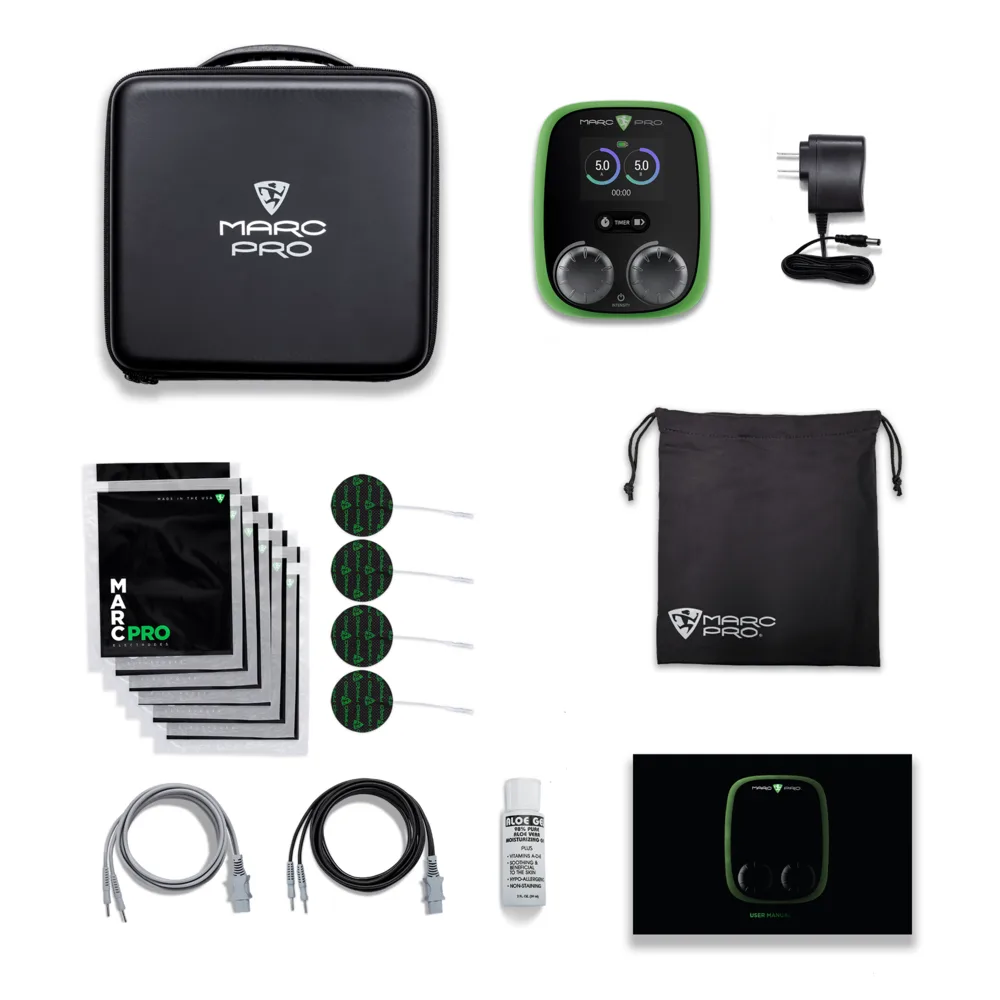
Two things that do not show up on the price tag and probably should. Every device comes with unlimited one-on-one coaching calls, which for a device whose results depend entirely on where you put the pads is not a nice extra, it is the manual. And the 30-day money-back guarantee means the honest way to evaluate this is to run it for a month of real practices and see whether Sunday feels different.
What it is cleared to do, and what it is not
Marc Pro is an over-the-counter electronic muscle conditioning device with FDA clearance, designed and assembled in Huntington Beach, California. The company states its intended use in one sentence, and it is worth reading exactly as written rather than as a competitor might paraphrase it.
Marc Pro is intended for muscle conditioning by stimulating muscle in order to improve or facilitate muscle performance. Marc Pro is not intended to be used for therapy or treatment of medical diseases or medical conditions. Marc Pro, product page
The Plus carries one additional indication, for temporary relief of pain associated with sore and aching muscles in the shoulder, waist, back, neck, arms and legs, due to strain from exercise and ordinary household and work activity. That is the whole of it. Nothing here treats an injury, shortens a rehab or replaces a doctor, and the company does not claim it does.
Not for everyone. Marc Pro states the device must not be used by people with cardiac pacemakers, defibrillators, or other implanted metallic electronic devices. If an arm hurts in a way that is sharp, sudden or getting worse, that is a conversation with a physician, not a recovery session.
What the people who bought it say
These are published on Marc Pro's baseball page, from verified buyers, and what stands out is who is writing them. Almost none are pros. They are parents of pitchers.
I have 3 pitchers in my family. One baseball player and two softball. Using the Marc Pro is keeping them in the game and provides greater recovery than anything else we've tried including ice, chiropractic care and using the Hypervolt shoulder.
★★★★★Alicia K., verified buyer
This is the smartest investment I have ever purchased for my son who is a pitcher. He uses it on a regular basis because it makes his arm feel better after throwing. ALL PLAYERS NEED TO INVEST IN ONE!!
★★★★★Tyson B., verified buyer
Great product. My son played in the CWS and was having rib pain. He told the only thing that was making him feel better was the Marc Pro the team had. I went and bought one for so he could use it during the summer. He loves it.
★★★★★Hans M., verified buyer
We use our Marc Pro at our training facility for all of our baseball and softball players. We also take it on the road with us to games /tournaments for our travel teams/players to use to help with recovery.
★★★★★Matt P., verified buyer
Reviews reproduced as published on marcpro.com/baseball. Individual results vary.
Who this is actually for
Not everyone needs a $699 recovery device, and the people who benefit most are easy to describe.
- The multi-outing weekend. Tournament formats ask for three or four days of throwing with one night in between. That is the exact gap this fills.
- The two-sport athlete, whose season never really ends and who therefore never gets an off-ramp.
- The parent doing the driving. Read the reviews again. The buyer is usually not the player.
- Anyone who was told to ice and has been quietly wondering for a few seasons whether it does anything.
And who it is not for. Someone looking for a patch that makes pain disappear during a game, because that is what a TENS unit does and Marc Pro says so itself. Someone who will use it twice. Someone who wants a result without spending the 30 minutes, because the 30 minutes is the product.
The arm does not need to be tougher. It needs traffic, and it needs it in the hours after the work, not the day of the next start.
See Marc Pro for baseball$699, 12 payment plan available, 30-day money-back guarantee. The Plus is here if the pain control mode matters to you.